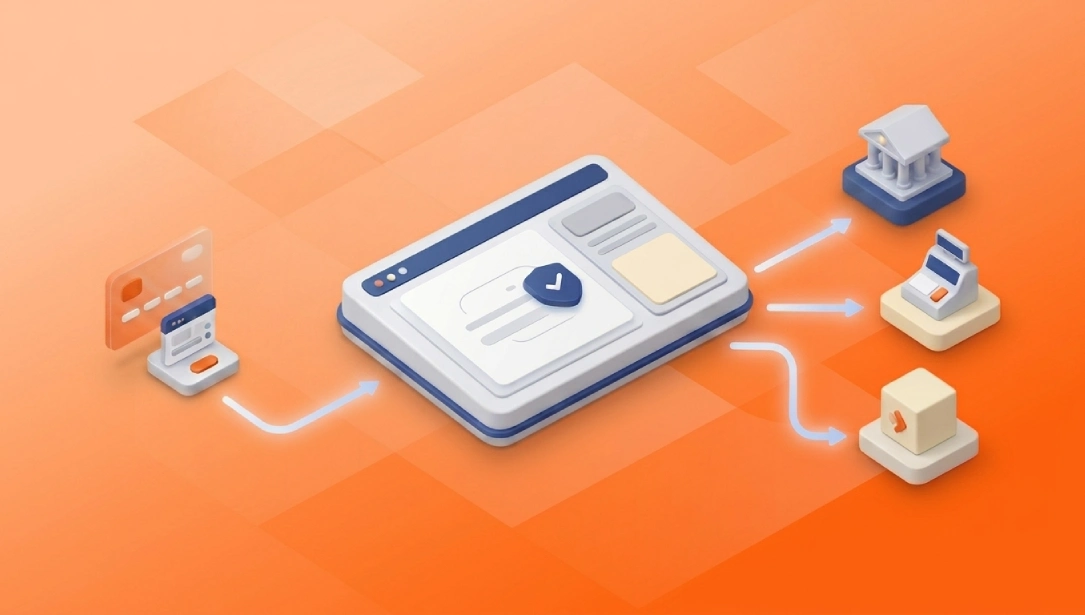
Generating a cash position from account transactions is a strategic financial analysis process that aggregates a business’s scattered financial data from various banks into a single hub via Open Banking APIs, thereby providing a real-time and clear view of liquidity. Traditional accounting methods trap businesses in a reactive cycle. In contrast, modern platforms automatically tag raw bank data, reconcile it with ERP systems in seconds, and provide executives with actionable insights. Consequently, this integration directly increases working capital efficiency while eliminating the risk of human error.
Finance departments at medium and large-sized businesses start each workday with a critical question: “Exactly how much cash do we have in our accounts today, and what payments do we need to make by the end of the day?” However, manually checking the balances of dozens of accounts spread across different banks and attempting to consolidate incoming transfers by copying them into Excel files creates significant operational disruption. Furthermore, these manual processes drain the energy of finance teams and exponentially increase the margin for error. When you collect data with delays, you cannot clearly see the real-time liquidity situation. As a result, your business may miss short-term investment opportunities or be forced to bear unnecessary credit costs.
The Legal Framework for Open Banking and Payment Services Data Sharing Services (ÖHVPS)
At the heart of this structural transformation lies the Payment Services Data Sharing Services (ÖHVPS). The regulatory framework established by the Central Bank of the Republic of Turkey (TCMB) democratizes businesses’ financial data and makes it accessible to authorized third-party providers (TPPs). The Account Information Service (HBHS), a cornerstone of cash position management, presents consolidated information from different banks on a single screen based on user consent (explicit consent).
Aligned with the European Data Protection Board’s (EDPB) PSD2 guidelines, this system clarifies the concept of “explicit consent,” transforming it into a contract with clearly defined boundaries. Data-owning businesses can clearly see, during the contract phase, the types of financial data to be processed and the purposes for which this data will be used. Upon examining the technical architecture, a system-specific identifier is assigned when the consent object is created. Consequently, requests sent to banks via the API return responses only within the date and data boundaries specified by the customer. These strict boundaries ensure that businesses maintain maximum data sovereignty.
Additionally, Strong Customer Authentication (SCA) standards ensure the security of data flows. [Evidence Type: Regulatory - BDDK Information Systems Regulation] When it comes to bulk access to corporate account information, platforms implement identity verification mechanisms at the highest level.
From the Perspective of Financial Reporting Standards (TMS 7)
The accuracy and transparency of financial data are clearly structured within the framework of the Turkish Accounting Standards (TAS) published by the Public Oversight Authority (KGK). The TAS 7 Cash Flow Statements standard requires businesses to transparently report historical changes in their cash and cash equivalents.
However, deriving a real-time cash position from account transactions does not simply mean adding up the balances. Businesses use this data to create a dynamic map of future liquidity strength and the ability to meet obligations. According to the TMS 7 standard, historical cash flow information serves as an indicator showing the amount and timing of future cash flows. Especially when external factors such as exchange rates, interest rates, and market volatility threaten working capital, CFOs can only manage these risks through real-time position tracking. Open banking-based systems fully automate the data transparency and reconciliation requirements mandated by IFRS 7.
Architecture for Transitioning from Dispersed Accounts to a Centralized Cash Position
Raw data stored across different banks, currencies, and account types creates nothing more than a difficult-to-manage “data noise” unless it is integrated into an ERP or accounting system. Transforming this data into a dashboard that guides strategic decisions requires a seamless and error-free data pipeline.
In this architectural workflow, the “Automated Reconciliation” process is of critical importance from an accounting perspective. In traditional manual processes, finance teams manually match hundreds of lines of transaction data. In contrast, open banking automation transforms this process into an instant, rule-based reconciliation engine. As a result, companies can identify financial discrepancies early and quickly resolve suspense accounts on the balance sheet.
Integration Model for Large-Scale Corporate Operations
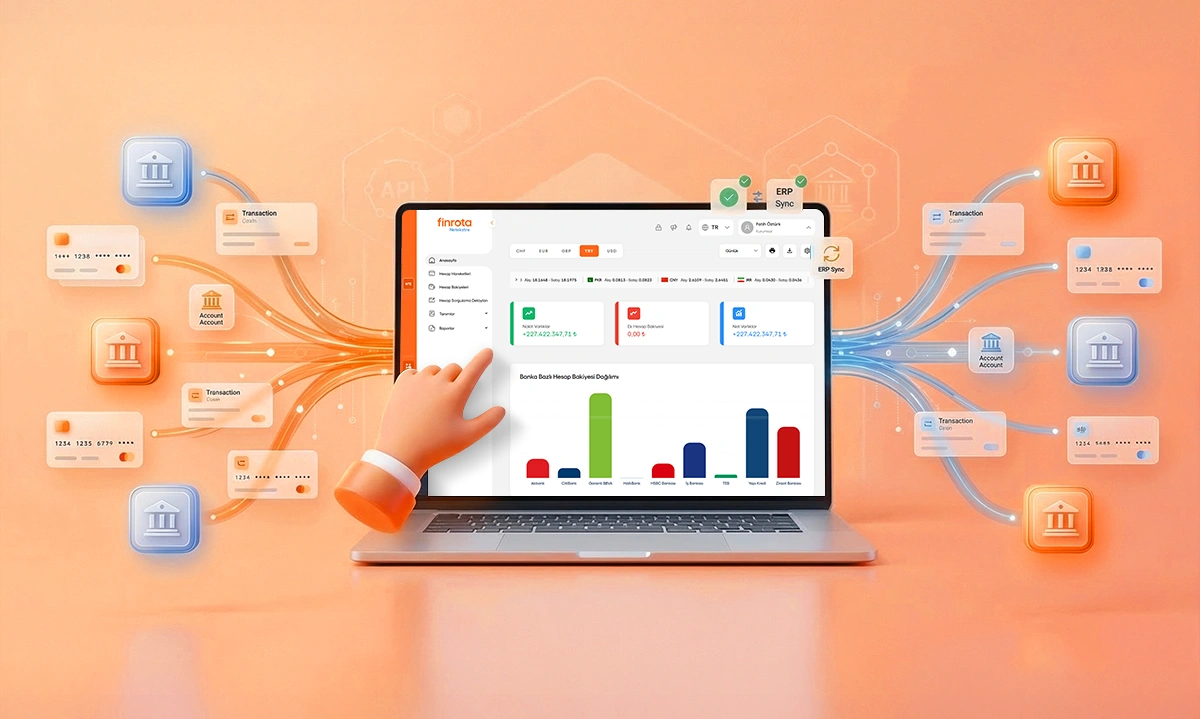
Large-scale corporations are implementing this theoretical framework with high-capacity integration products to manage high-volume cash inflows and outflows. Netekstre, developed by Finrota, consolidates all bank and credit card POS transactions from corporate companies into a single centralized dashboard.
The treasury departments of large corporations manage complex account matrices involving thousands of daily transactions using the platform’s rule engine. The platform automatically aggregates unstructured transactions from various banks, standardizes them, and instantly transfers them to global ERP systems such as SAP, Oracle, and Microsoft Dynamics. This enables companies to completely eliminate the margin of error associated with manual operations. Furthermore, “User Authorization” is enabled on the platform in accordance with information security principles (Segregation of Duties). Managers define restricted permissions for employees based on account or transaction type, thereby preventing the risk of data leaks originating from within the organization.
Operational Agility for Growing Businesses (SMEs)
The dynamics of financial survival within the SME ecosystem are far more delicate. Time is the scarcest resource for SMEs. SMEs that attempt to manually track deposits across different banks with limited accounting staff often lose sight of their cash position.
SME packages designed to address this specific need offer an extremely agile structure that requires no complex IT setup. Businesses consent to online data transfer via their banks’ interfaces and gain control over all their financial data without the need for additional server installations. The system, which integrates instantly with over 30 banks—including Akbank, Garanti BBVA, and İş Bankası—enables SME managers to monitor their company’s financial health through daily analyses. As a result, small businesses can generate robust forward-looking forecasts just like large corporations.
Take Action for Centralized Cash Management.
Leverage open banking technologies to consolidate your scattered bank accounts on a single screen, automate your ERP reconciliation, and view your business’s real-time cash position. Visit the Netekstre page to explore solutions that will eliminate your operational burdens, or request a demo to learn more about the product.
Legal and Financial Risk Disclosure: The summaries of open banking regulations, IFRS 7 reporting standards, and operational concepts included in this content are provided for general informational purposes only. When determining your company’s cash flow strategies or making decisions regarding technological infrastructure investments, it is recommended that you seek professional guidance from your independent financial advisors or legal counsel, taking into account the specific dynamics of your organization.